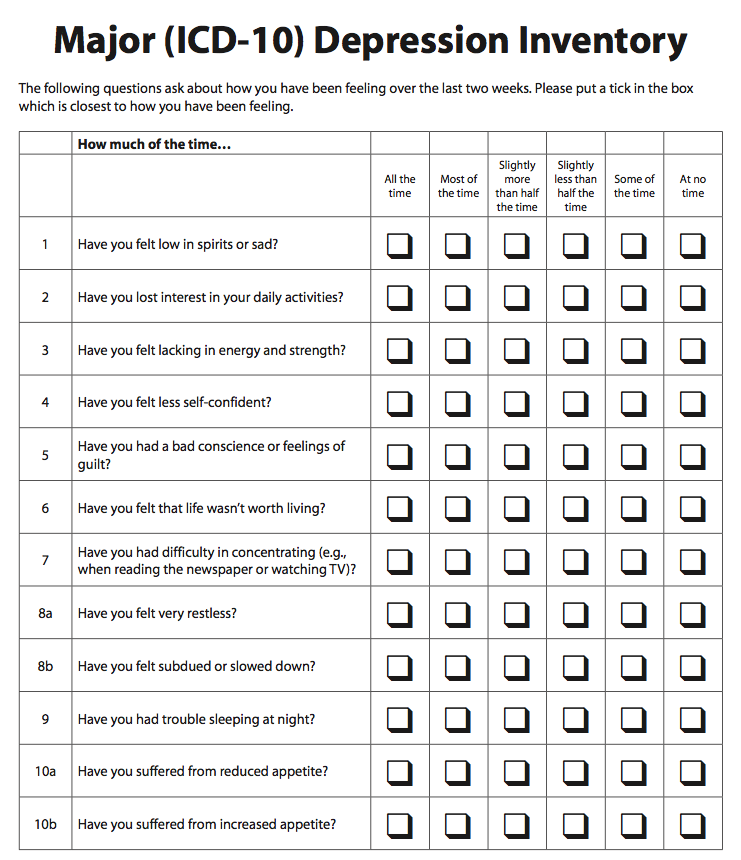
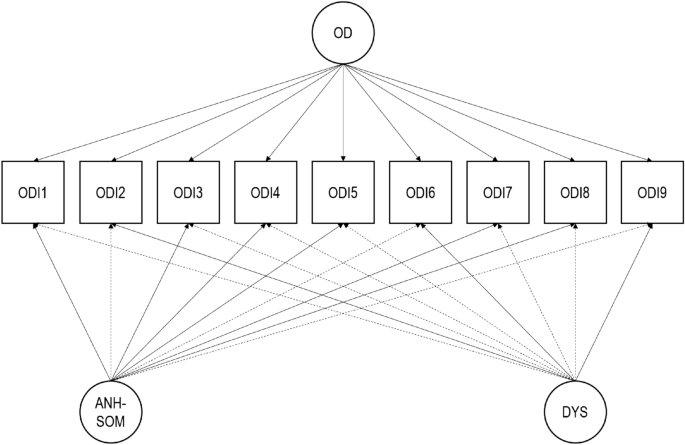
The Occupational Depression Inventory (ODI) is a psychometric instrument, the purpose of which is to assess the severity of work-related depressive symptoms and arrive at a provisional diagnosis of depressive disorder. The ODI can be used by occupational health specialists and epidemiologists.
Occupational health specialists (e.g., occupational physicians, occupational health psychologists, and clinical psychologists) can employ the instrument to ascertain the extent to which a worker has experienced work-related depressive symptoms. It would then be incumbent upon the specialists to identify and correct the specific job conditions (e.g., work overload, bullying) that give rise to elevations in depressive symptoms. Epidemologists can take advantage of an algorithm that comes with the instrument to ascertain the frequency of provisional cases of work-related depressive disorder.
The original ODI was first published in English and French. Both versions have excellent psychometric properties. Since its inception, psychometrically valid versions of the instrument have become available in other languages, including Spanish, Italian, Brazilian Portuguese, and Swedish.
Validity research on the ODI has been conducted in several countries. These countries include the United States, France, Brazil, Spain, Italy, Switzerland, New Zealand, South Africa, Australia, and Sweden
Notes
See also
- Beck Depression Inventory
- Center for Epidemiological Studies Depression Scale (CES-D)
- Hospital Anxiety and Depression Scale
- Occupational burnout
- Occupational health psychology
- Nine-Item Patient Health Questionnaire (PHQ-9)
- Rating scales for depression
- Society for Occupational Health Psychology
References